Surging Tuojiang River Welcomes Dragon Boat Festival: Chinese and Foreign Guests Enjoy Ziyang’s Grand Dragon Boat Festival Celebration


As dawn breaks over the Tuojiang River, golden ripples shimmer on the water reflecting the morning glow. Crowds have flocked to both riverbanks in Yanjiang District, Ziyang, where laughter, drum music and river breezes blend together. The 2026 Ziyang Dragon Boat Festival Cultural Series unfolds as a spectacular feast weaving time-honored traditions with modern vitality, reviving the city’s cherished Dragon Boat Festival memories.
River Waters Herald Grand Ceremony: A Vivid Scroll of Dragon Boat Festival Splendor
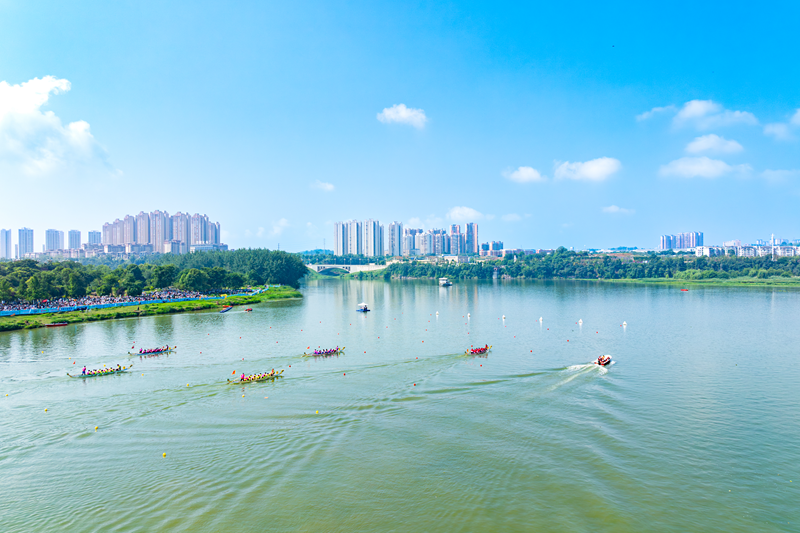
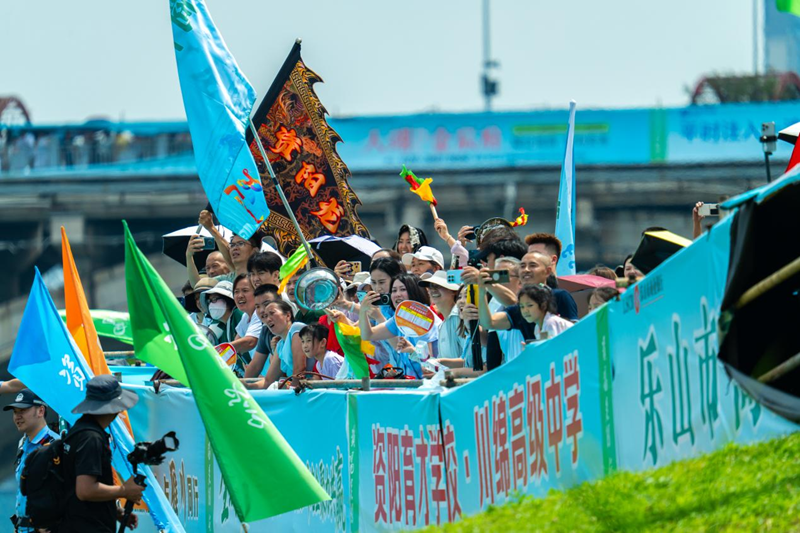
Green waves dance as dragon boats glide across the river. The morning session of the 2026 Ziyang Dragon Boat Invitational Tournament, themed Ziyang, a Wonderful Hometown · Dragon Boat Races Commemorate the Dragon Boat Festival, kicks off warmly on the Tuojiang waterway of Yanjiang District. A dazzling lineup of performances unfolds on the water: aerial stunts, ancient dragon worship rituals, and the folk duck-catching game. The millennia-old Dragon Boat Festival heritage merges seamlessly with the thrill of water sports. Overseas cultural tourism creators gather along the riverbanks to immerse themselves in the charm of this traditional Chinese festival. IRINA, a renowned Russian short-video creator, watches the ceremony intently, sharing her unique insights into Ziyang’s distinctive Dragon Boat culture.
The grand water show, brimming with ritual and visual drama, opens the event. Towing speedboats carry a huge Five-Star Red Flag cutting through the waves, escorted by eight teams of power surfboards flanking either side. The bright red flag mirrors the sparkling river, painting a magnificent scene of the nation welcoming guests from all corners of the globe. Right behind the flag formation, motorboat teams zip and drift nimbly across the river, sending sprays of water flying in all directions. Flyboard athletes soar high above the water supported by water jets, pulling off breathtaking mid-air spins and diving swoops—their jaw-dropping stunts draw thunderous cheers from spectators lining both banks. To wrap up the performance, a giant banner emblazoned with Ziyang, a Wonderful Hometown unfurls slowly over the river. All water performers line up and exit in order, telling the stories of Shuren Hometown’s landscapes and culture through the river’s grand scenery.
Ancient Rituals Pass Down Cultural Heritage: Chinese and Foreign Visitors Savor Dragon Boat Festival Charms
Before the echoes of the water show fade, a solemn dragon-head blessing ceremony takes center stage on the main stage. Thirty-two dragon bearers in Hanfu carry eight red silk-wrapped dragon heads to the platform in groups of four, accompanied by the resonant beat of ancient drums. Eight role models from all walks of life step forward one by one, holding purification brooms woven with calamus and pomelo leaves. They dip the brooms in holy water mixed with five grains and gently brush the dragon heads three times—a ritual embodying wishes for evil to be dispelled, peace for rivers and residents, and everlasting cultural heritage.
Once the ceremony concludes, the bearers escort the dragon heads to the eye-dotting platform by the river. Guests dip writing brushes in cinnabar to dot the eyes, foreheads, noses, mouths and horns of each dragon head, each stroke carrying people’s sincere hopes for favorable weather and national prosperity. This fully restored set of age-old rituals lets every attendee deeply experience the core cultural meaning of worshipping dragons and praying for blessings during the Dragon Boat Festival.
“I have traveled to many cities across China to experience traditional festivals, but this is my first time witnessing the complete ancient rituals of fetching, purifying and dotting dragon heads. I am utterly moved,” said IRINA, the Russian cultural tourism creator, as she recorded the entire blessing ceremony with her camera. A dedicated creator focusing on Chinese city cultural tourism content, she traveled all the way from Shanghai to attend Ziyang’s festival. IRINA shared that she had only watched dragon boat races on short-video platforms before, but seeing the thousand-year-old sacrificial rituals in person allowed her to truly grasp the deeper meaning of the Dragon Boat Festival: honoring ancient sages and praying for peace and wellbeing for all families.
“Every ritual step holds the unique romance of the Chinese people. Dotting dragon eyes with cinnabar embodies hopes for a thriving life—dignified yet heartwarming. Later, when the dragon boat races begin, paddlers will row in perfect unison, forging ahead side by side. This is the most vivid portrayal of‘standing together through thick and thin’. I will share everything I’ve seen and felt today with overseas netizens, letting more people discover the vibrant, profound traditional Chinese culture.”
Boats Race for Glory: Folk Celebrations Fuel Cultural Tourism Development
After the eye-dotting ceremony, eighteen dragon boat teams from across Sichuan and Chongqing parade along the river. Teams from Tongnan in Chongqing, Chengdu, local colleges and universities, rural towns and village enterprises, and employee groups take turns riding the waves. Paddles strike the water as dragon boats surge forward, featuring long-established local teams rooted in rural communities as well as dynamic youth crews. Athletes from all sectors converge on the Tuojiang River, showcasing the vigorous vitality of mass fitness across Sichuan and Chongqing.
Once the parade ends, the stirring drum dance Prosperous China blares from the stage, its thunderous beats sounding the call to arms for the dragon boat athletes everyone has been waiting for.
The highly anticipated dragon boat races officially commence. The eighteen teams compete in groups over a 500-meter straight course in two preliminary rounds. Resounding drumbeats urge the athletes onward; paddlers move in flawless synchronization, straining every muscle to dash toward the finish line. Sweat drips into the river amid roaring cheers, and the spectacular sight of countless boats vying for the lead fully embodies the pioneering, competitive spirit of dragon boat culture. After fierce elimination rounds, twelve top teams advance to the finals for another round of head-to-head races to compete for the top rankings.
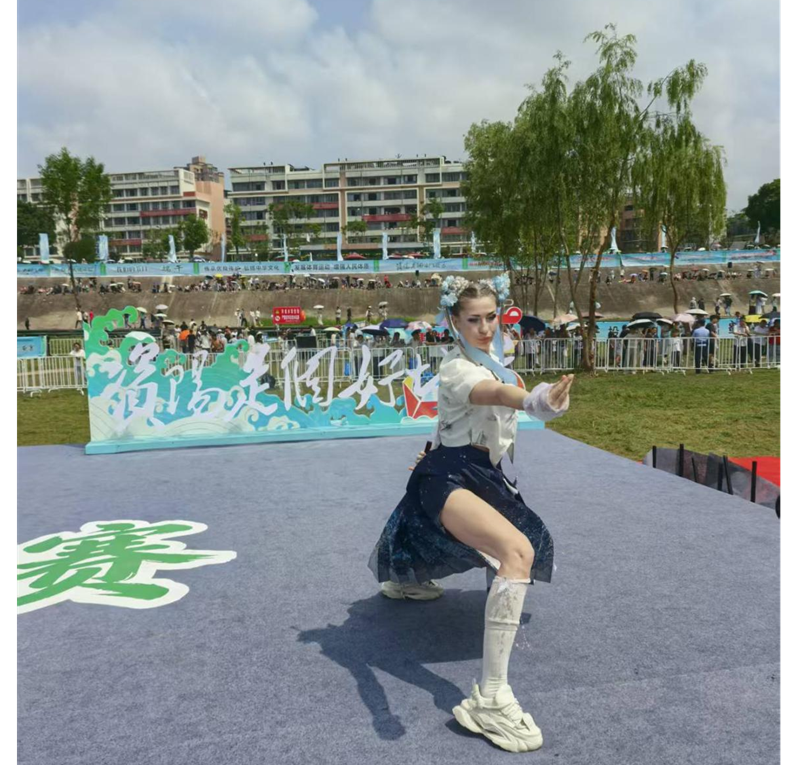
Captivated by the charged atmosphere on site, IRINA (Aisha) even demonstrates Chinese martial arts she just learned.
Once the competitive races draw to a close, the lively folk duck-catching game, a beloved tradition of Sichuan and Chongqing, fills the venue with joy. Staff release live ducks into the river in batches, and swimming enthusiasts leap into the water to chase and corral them amid laughter and merriment. This age-old custom of“catching fortune and good luck” amplifies the festive mood. Whether participants catch a duck or not, everyone revels in the unique joy of the Dragon Boat Festival.
The morning’s event seamlessly blends solemn ancient rituals, thrilling competitive races and lighthearted folk fun. It not only safeguards the intangible cultural heritage of the Dragon Boat Festival but also builds a platform for cultural and sports exchanges among residents of Sichuan and Chongqing. Moreover, through overseas creators documenting the event, it serves as a bridge to showcase the vivid charm of China’s traditional festivals to the world. IRINA remarks that Ziyang boasts the cultural legacy of Hong Hong, profound stone carving heritage, and lively folk customs steeped in everyday life. This grand dragon boat festival has allowed her to truly feel the warmth of Chinese culture. She plans to share her experiences of Ziyang’s Dragon Boat Festival across overseas social media platforms, enabling international audiences to explore Shuren Hometown and the beauty of China through the dragon boat races on the Tuojiang River.
By Lin Yuanke, Li Yue, Li Qiang
Translation:Sichuan University Aeel
Reviewed by:Liu Hongming from Xi'anTranslation Institute